Hispanic and New Mexican heritage.
Three centuries of Spanish, Mexican and New Mexican life: the plaza, the church, the acequias, the chile and the center in Barelas that holds it together.
A villa on the Camino Real.
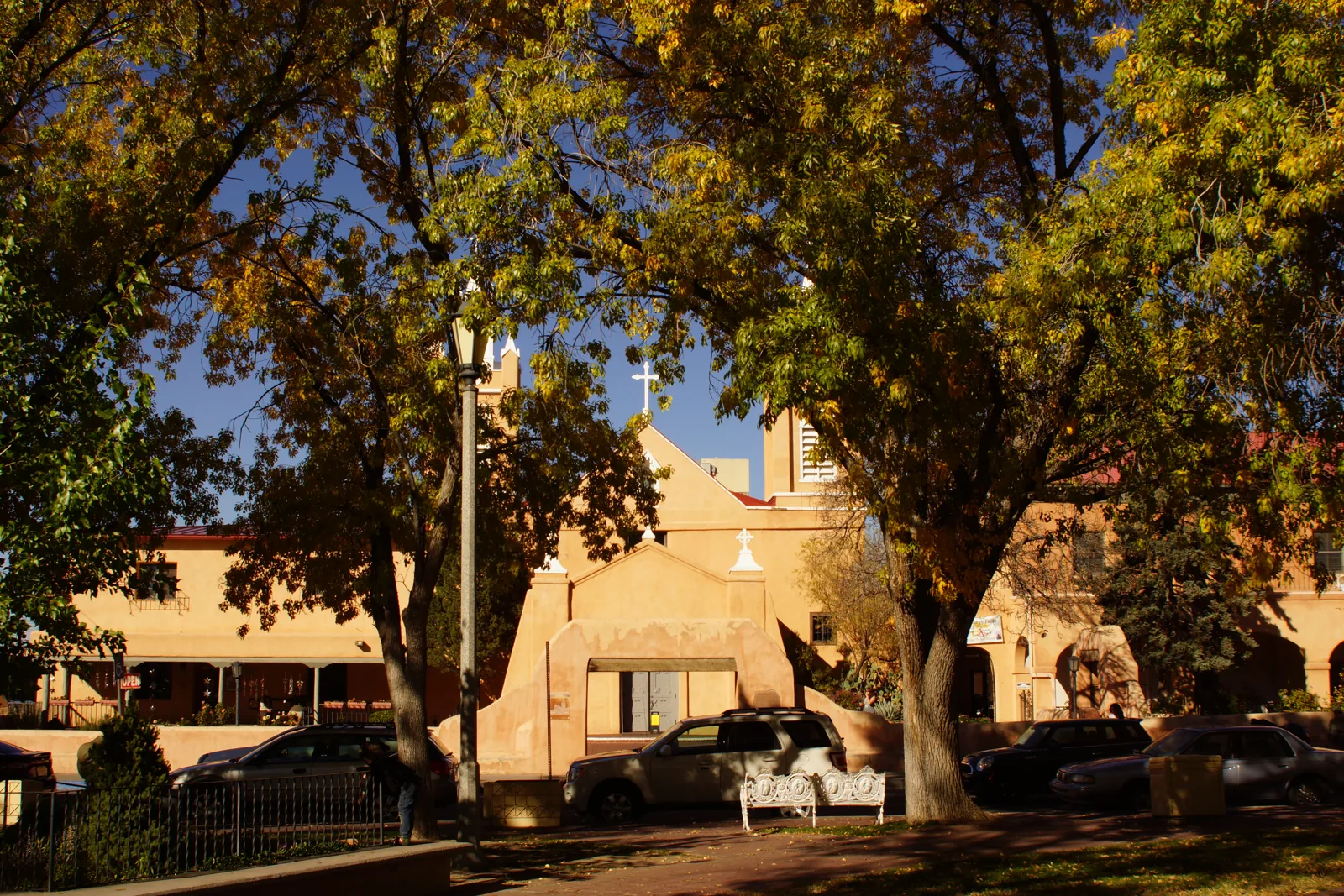
Albuquerque was founded in 1706 as a Spanish villa on the Camino Real, laid out around the plaza that is now Old Town, with the church of San Felipe de Neri on its north side; the present church has stood since 1793. The valley’s acequias still carry river water to fields, the food is its own cuisine, and the National Hispanic Cultural Center in Barelas gathers the art, the theater and the history under one roof.
Each name below opens the place’s own page with its hours, its phone and its map.
Places.
The plaza, the church, the centers and the houses.
Old Town Plaza
The plaza the city grew from: adobe storefronts, the gazebo, the artists under the portal, the church at its head.
Old TownSan Felipe de Neri Church
The parish church on the plaza since 1793, with its two towers and its garden; Mass is still said.
Old Town plazaNational Hispanic Cultural Center
Galleries, three theaters, a library and the torreon with Frederico Vigil’s fresco Mundos de Mestizaje, on the river in Barelas.
Fourth Street SW, BarelasAlbuquerque Museum
The city’s art and history museum beside the plaza, with the Spanish colonial collection and the sculpture garden.
Old TownCasa San Ysidro
The Albuquerque Museum’s historic rancho in Corrales: a nineteenth-century house, a chapel and the furnishings of valley life, by tour.
CorralesGutierrez-Hubbell House
An 1860s hacienda on the Camino Real in the South Valley, now a history and cultural center with a farm.
Isleta Boulevard SW
Kitchens.
The New Mexican rooms the city has eaten in for generations.
Barelas Coffee House
Red chile, menudo and huevos rancheros on Fourth Street since the 1970s.
Fourth Street SW, BarelasEl Modelo
Tamales, chicharrones and tortillas from the counter since 1929; eat at the picnic tables.
Second Street SWDuran Central Pharmacy
The lunch counter inside the pharmacy, red chile and tortillas, since 1942.
Central, Old TownGolden Crown Panaderia
Green chile bread, biscochitos and empanadas from a neighborhood bakery.
Mountain Road NWMary and Tito's Cafe
Carne adovada and the turnover, a James Beard America’s Classic.
Fourth Street NWSadie's of New Mexico
The big plates and the salsa, the North Valley’s loud family room.
Fourth Street NW, North ValleyGarcia's Kitchen
A local chain of New Mexican kitchens; the one on Central is a Route 66 stop.
Several, Central and the valleyEl Pinto
The patios under the cottonwoods at the north end of the valley, salsa by the jar.
Fourth Street NW, North ValleyChurch Street Cafe
New Mexican plates in an adobe house a step from the church.
Old TownLos Poblanos
The inn and organic farm in a 1930s John Gaw Meem ranch: lavender fields, the restaurant, the farm shop.
Los Ranchos
Questions about the heritage.
Is New Mexican food Mexican food?
No. It is its own cuisine, built on the local chile with Pueblo and Spanish roots: red and green chile, stacked enchiladas, carne adovada, sopaipillas. Ask red or green.
What is an acequia?
A community irrigation ditch from Spanish times, still run by its members and a mayordomo, carrying river water to the fields of the valleys. You see them along the North and South Valley roads.
Why is Albuquerque spelled with one r?
The villa was named in 1706 for the Duke of Alburquerque, viceroy of New Spain. The first r fell out of common use in the 1800s and the city kept the shorter spelling.
What is the Camino Real?
The royal road from Mexico City to Santa Fe. Albuquerque grew up as a stop on it; Fourth Street follows its line through the valley.
When are the luminarias?
On Christmas Eve, around the Old Town plaza and along the walls and walks of the valley neighborhoods. Old Town fills after dark; the Albuquerque Museum runs a shuttle tour most years.